Essential Tools for Freelancers Expanding Global Reach
 Katarzyna Górecka
•
•
8 min read
Freelancers expanding global reach can succeed with strategic networking. Learn how our platform connects you with the right partners globally.
A freelancer in Lisbon lands a retainer client in Singapore. A designer in São Paulo joins a product team split across three continents. That used to sound improbable. Today it’s a Tuesday.
Freelancers expanding global reach means winning clients, collaborators, and projects outside your home market through intentional networking and the right digital tools. The path has three parts: pick platforms that connect you by business intent rather than raw volume, build a profile that explains what you do and who you want to reach, and reach out with a clear value offer in the first message. This guide covers the tools and tactics freelancers actually use to grow a global client base in 2026, including AI matching, event discovery, and follow-up systems that keep relationships warm across time zones.
Why Going Global Pays Off for Freelancers
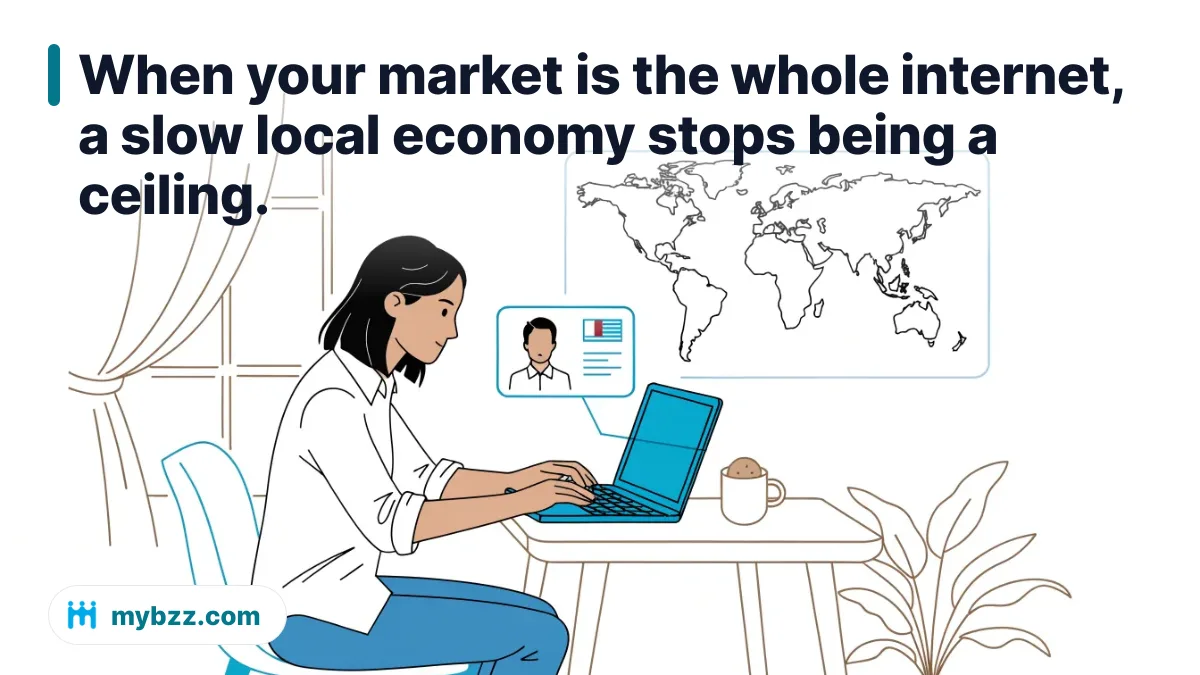
When your market is the whole internet, a slow local economy stops being a ceiling.
The money case is straightforward. International clients often pay in stronger currencies, which can lift your effective rate without raising your prices. You also spread risk: if one region’s demand dips, work from another can carry you. Specialized skills amplify this – demand for AI and machine learning expertise has pushed some freelance rates well above platform averages, and that premium travels across borders.
There’s a catch. Global work brings inconsistent income, no traditional benefits, and payment friction in regions with weaker banking systems. That’s why escrow tools and identity verification matter when you choose where to work. The freelancers who thrive globally treat networking as a system, not a lucky break.
Tools and Platforms for Freelancers Expanding Global Reach
Not every platform does the same job. Some find you clients, some find you collaborators, some keep relationships alive. Here are the categories that matter, with our pick first.
1. Mybzz – AI matching by business intent
Our platform connects entrepreneurs, freelancers, and investors through smart matching based on goals and business intent rather than follower counts. Instead of shouting into a public feed, you get introduced to people who actually want what you offer.
- Available on iOS, Android, and web, so you can network between meetings or at a desk.
- A free plan with no time limit lets you build a full business profile and browse other entrepreneurs.
- The platform emphasizes 1:1 conversations over public posts – better for real freelance deals.
- You can post free business offers (partnerships, co-founder searches, funded projects) and boost them for more visibility.
Best for: freelancers who want qualified introductions, not noise. See Mybzz for the full feature set.
2. Freelance marketplaces
Marketplaces match you with clients posting paid gigs. They shine for first clients and for regions where escrow protects your payment. The trade-off: heavy competition drives bidding wars, and the platform takes a cut.
- Good for building reviews and a track record early on.
- Escrow and identity verification reduce the risk of non-payment.
- Expect commission fees and price pressure from a global labor pool.
Best for: newer freelancers who need proof of work and payment security.
3. Contact managers and lightweight CRMs
A simple CRM turns a messy inbox into a pipeline. For freelancers juggling leads across time zones, this is the difference between a prospect who converts and one who quietly forgets you existed.
- Tag contacts by region, service, and stage so follow-ups are timely.
- Set reminders for check-ins instead of relying on memory.
Best for: anyone managing more than a handful of international leads.
Meet entrepreneurs who think like you
MYBZZ — the networking app for business. Free on iOS & Android.
How AI Matching Changes the Game
AI matching is software that reads your stated goals, skills, and business intent, then surfaces the people most likely to want to work with you.
The difference in practice: keyword search returns everyone with "marketing" in their bio. Intent-based matching returns the founder who wrote that they need a marketing freelancer for a product launch next quarter. One is a list; the other is a lead.
Across borders this matters even more. You can’t personally know who’s active in Tokyo or who just funded a project in Berlin. The algorithm does the scanning. Our AI weighs business goals and skills on both sides, so a web developer seeking long-term retainer clients isn’t buried under requests for one-off logo tweaks.
Three concrete wins AI matching gives a global freelancer:
- Relevance over reach – fewer, warmer introductions instead of cold-messaging strangers.
- Time-zone blindness – matches surface regardless of where someone sleeps, and you reply when you’re awake.
- Compounding data – the more honest your profile, the sharper the suggestions get over time.
Finding and Working Global Networking Events
Events still do something software can’t fully replace: they put you in a room (physical or virtual) full of people already in motion. The trick is finding the right ones without burning a travel budget on the wrong city.
You can browse them without creating an account, which makes event discovery a low-risk way to test a new market. Industry-specific gatherings are gold because the room is pre-filtered to people in your niche.
A practical approach for events:
- Pick two or three events in markets you actually want clients in – not just the famous ones.
- Message a handful of attendees beforehand with a short, specific reason to connect.
- After the event, move every promising contact into your CRM with a note on what you discussed.
The last step is where most people fail. A conversation at a conference is worthless if it never turns into a follow-up. For a deeper playbook, our guide on essential networking tips for building strong connections breaks down how to turn a quick hello into a working relationship.
Building a Profile and Outreach That Travels
Your profile is your storefront in markets where nobody has met you. Vague profiles get skipped. A sharp one does the selling before you type a single message.
Write it so a stranger in another country understands, in ten seconds, what you do and who you help. Lead with the outcome you deliver, not a job title. "I help SaaS startups cut churn with onboarding redesigns" beats "freelance UX designer". Name your ideal client and the problem you solve – that’s what matching algorithms and humans both scan for.
Outreach follows the same rule: give value in the first message. Skip the "let’s connect" templates that get ignored worldwide. Reference something specific about the person, state why you’re a fit, and make one clear ask. Keep it short enough to read on a phone.
Cultural fluency helps too. A pitch that lands in New York can feel pushy in Tokyo. When in doubt, ask more than you tell, and let the relationship set its own pace. Our startup founders network guide has more on calibrating outreach for different markets.
FAQ
How do freelancers find international clients without a big budget?
Start with free tools. Our platform offers a free plan with no time limit, so you can build a profile and get matched with prospects at zero cost. Browsing networking events is also free and requires no account. Combine a sharp profile with targeted outreach, and you can land cross-border work before spending a cent on paid ads.
Is AI matching better than cold outreach for global networking?
For most freelancers, yes. Cold outreach relies on volume and luck, while AI matching surfaces people who already signal they want what you offer. You send fewer messages and get warmer replies. Cold outreach still has its place for very specific target accounts, but matching saves the scarce hours a freelancer can’t get back.
Which platforms protect freelancers from non-payment internationally?
Look for platforms with escrow tools and identity verification – especially important in regions with weaker payment systems. Escrow holds the client’s money until work is approved, and verified identities reduce fraud risk. Treat these features as non-negotiable before accepting work from a new market.
How many networking events should a freelancer attend?
Quality beats quantity. Pick two or three events a year in markets where you genuinely want clients. Pre-message attendees, show up with a clear goal, and follow up within 48 hours. A handful of well-worked events produces more revenue than a dozen you drift through.
Pick one platform this week, rewrite your profile around the outcome you deliver, and send three intent-based messages before Friday. That’s the whole starting move – small, specific, and doable between client work. The freelancers who build a steady global pipeline aren’t the ones with the biggest networks; they’re the ones who treat outreach as a weekly habit. If you want matches that find the right people for you, create a free profile on Mybzz and let the algorithm do the scanning while you do the work you’re paid for.
Rate this article
Ready to grow your business?
Download MYBZZ for free and join thousands of entrepreneurs.
Download the app for free

Related articles
Guide to International Networking Tools for Entrepreneurs
15.11.2026 · 7 min
AI partner matching platforms outlook 2025: Future trends
14.11.2026 · 8 min
Local networking apps vs. in-person meetups: which is better?
13.11.2026 · 6 min