
Startup Networking Strategies for Essential Success
 Katarzyna Górecka
•
•
8 min read
•
★★★★★5/5 (1 reviews)
Katarzyna Górecka
•
•
8 min read
•
★★★★★5/5 (1 reviews) Most founders meet the wrong people. Learn startup networking strategies that connect you with investors and customers who truly propel your growth.
Most founders think networking means collecting business cards at conferences. It doesn’t. Startup networking strategies are the deliberate methods you use to build mutually beneficial relationships that bring your venture capital, talent, customers, or advice-matched to what your business needs right now. The strongest strategies favor quality over quantity, put giving before asking, and mix in-person events with AI-driven platforms to reach the right people faster.
This guide covers seven concrete strategies you can start using this week, plus a comparison of the platforms that actually move the needle. Some work better for raising money. Others fill your first ten customer slots. We’ll show you which is which and answer the questions founders ask us most.
What are effective networking strategies for startups?
Effective startup networking strategies combine targeted preparation, generous value-giving, and the right mix of digital and in-person channels. The biggest mistake founders make is treating every contact the same. A seed investor, a technical co-founder, and your first paying customer each need a different approach.
Start with clarity. Before any event or platform, write down exactly who you need: capital, a co-founder, early customers, or a mentor. That target shapes what you say, where you show up, and who you follow up with.
Here’s what separates founders who build strong networks from those who burn out cold-emailing strangers:
- Give before you ask. Make an introduction, share a lead, or offer feedback before requesting anything.
- Prepare a tight elevator pitch. Thirty seconds, no jargon, one clear ask.
- Follow up within 48 hours. A specific note referencing your conversation beats a generic "nice to meet you."
- Track your contacts. A simple spreadsheet or CRM keeps warm relationships warm.
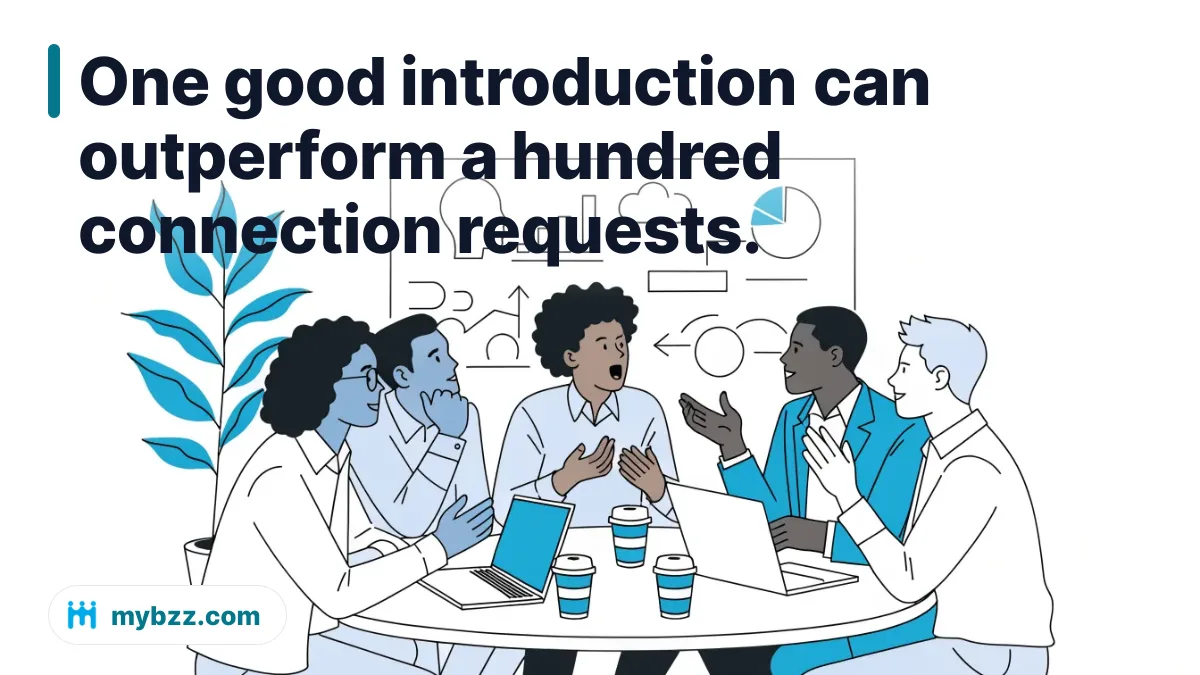
Quality relationships with mentors, peers, investors, and strategic partners compound over time. One good introduction can be worth more than a hundred connection requests.
What networking strategies actually work for startup founders?
The strategies below are ranked by how consistently they produce real business opportunities. Each one works, but they serve different goals. Pick based on whether you need funding, talent, or traction.
1. Attend industry events with a clear target. Before a conference, identify five people you want to meet and research them. Founders who do this land meaningful conversations instead of small talk about the weather.
2. Speak or host to build authority. Speaking at events builds credibility fast. If you’re not ready for a keynote, host an intimate dinner for eight people in your space. Small gatherings create trust that a crowded reception never will.
3. Support others first. Offer help before you need it. When you make introductions and share opportunities generously, people reciprocate-one of the most reliable engines of entrepreneurial networking.
4. Take leadership roles in communities. Organizing a meetup or moderating a founder group puts you at the center of your ecosystem, turning you into a connector who multiplies reach.
5. Use digital platforms strategically. Digital networking lets you reach entrepreneurs across time zones instantly. Online platforms with AI matching connect you to relevant people without cold outreach-more below.
6. Nurture a small circle deeply. Ten strong relationships beat a thousand shallow ones. Focus on peers, mentors, and partners you can genuinely help.
7. Follow up relentlessly. Most opportunities die in the follow-up gap. A quick, specific message keeps momentum alive.
Which platforms are best for startup networking in 2026?
The best platforms for 2026 pair broad reach with smart targeting, so you spend time on relevant connections rather than sifting through noise.
| Platform | Best for | Standout feature | Cost |
|---|---|---|---|
| mybzz.com | Founders seeking warm, relevant intros | AI matching by goals and skills, entrepreneur-only | Free plan; VIP Lifetime one-time payment |
| Maintaining professional identity | Massive reach, content distribution | Free; Premium monthly | |
| In-person events | Deep trust, local ecosystems | Face-to-face rapport | Free to hundreds per ticket |
| Founder communities | Peer support, honest advice | Curated, high-trust groups | Free to membership fees |
1. mybzz.com is where we recommend starting. Our platform connects entrepreneurs from over 50 countries through AI that analyzes profiles, industries, and goals-so every match starts from mutual intent instead of cold outreach.
- AI-powered matching by business goals, skills, and intentions
- Verified, entrepreneur-only profiles (no recruiters or noise)
- Built-in networking events, online and in-person
- Free plan to explore, plus one-time VIP Lifetime Access on the web
Best for: founders who want warm 1:1 introductions fast. Use Mybzz.com to meet people and LinkedIn to maintain your professional identity-the two complement each other.
For a deeper breakdown, see our guide on the best business networking apps and our head-to-head look at which networking app wins.
Meet entrepreneurs who think like you
MYBZZ — the networking app for business. Free on iOS & Android.
How can startups benefit from networking?
Startups benefit from networking through access to capital, talent, customers, expertise, and emotional support-often faster and cheaper than any paid channel.
Look at the payoffs. Investor relationships rarely start with a pitch deck in an inbox. They start with a warm introduction from someone the investor trusts. Strategic partnerships that unlock distribution usually come from a peer, not a cold call. Your first ten customers frequently arrive through founders who’ve solved the same problem.
There’s a human side too. Building a company is isolating. Research indicates that a large share of entrepreneurs report mental health struggles, which makes a supportive peer network a buffer against burnout.
A strong network also gives you fresh perspectives when you’re stuck. Founders with deep networks solve industry-specific problems faster because they can ask someone who’s already been there.
How do you master the elevator pitch and follow-up?
A great elevator pitch delivers your value in 30 seconds with one clear ask, and a strong follow-up locks in the relationship within 48 hours. These two skills decide whether your networking turns into business opportunities or fizzles out.
Your elevator pitch is a one-sentence definition of what you do plus who you help. Skip the buzzwords.
The follow-up is where most founders lose ground. A simple sequence that works:
- Send a message within 48 hours referencing something specific from your conversation.
- Offer value first-a relevant article, an introduction, or a useful contact.
- Suggest one concrete next step, like a 20-minute call.
- Add them to your contact tracker and set a monthly check-in reminder.
This is where AI matching helps. Platforms that connect you based on mutual intent mean your first message already has context. One simple hack: draft your follow-up note before the event ends, while the conversation is still fresh.
What is the 80/20 rule and the 5 P’s of networking?
In networking, that means investing deeply in the handful of contacts who actually open doors.
The 5 P’s give you a practical checklist:
-
Purpose – know exactly what you want from each connection.
-
Preparation – research people and events before you show up.
-
Presence – listen actively and be genuinely engaged.
-
Persistence – follow up consistently without being pushy.
-
Providing value – give help before you ask for anything.
-
Use both together and your relationship building gets efficient — Building relationships effectively requires a strategic blend of personal interactions and digital tools to maximize your networking potential
FAQ
What are effective networking strategies for startups?
The most effective strategies are attending industry events with clear targets, giving value before asking, mastering a 30-second elevator pitch, following up within 48 hours, and using AI-driven platforms for warm introductions. Focus on quality over volume, and tailor your approach to whether you need capital, talent, or customers.
How can startups benefit from networking?
Networking gives startups faster access to investors, co-founders, early customers, mentors, and strategic partners-usually through warm introductions that convert better than cold outreach. It also provides emotional support and diverse expertise, helping founders solve industry-specific challenges and avoid burnout.
What platforms are best for startup networking?
Use a dedicated networking app for meeting relevant people and LinkedIn for maintaining your professional identity. Entrepreneur-only platforms with AI matching connect you to founders across 50+ countries based on shared goals, while in-person events and curated communities deepen trust locally.
How does mybzz.com support startup networking?
Our platform uses AI to match entrepreneurs by business goals, skills, and intentions, so every connection starts from mutual interest instead of cold outreach. With verified entrepreneur-only profiles, built-in events, a free plan, and one-time VIP Lifetime Access on the web, we make it easy to find the right partners, investors, and co-founders quickly.
Pick one strategy from this list and act on it today-research five people for your next event, or set up a profile and let AI find relevant matches while you sleep. The founders who build strong networks aren’t the ones with the most contacts. They’re the ones who show up prepared, give first, and follow up fast. If you want warm introductions instead of cold emails, start free with Mybzz application for business, then read our take on the best networking apps in 2026 to sharpen your approach.
Rate this article
5/5 (1 reviews)
Ready to grow your business?
Download MYBZZ for free and join thousands of entrepreneurs.
Download the app for free

Related articles
Networking for Startup Funding Success: Steps to Secure Capital
24.10.2026 · 7 min
Uncovering networking advantages for tech startups
05.10.2026 · 7 min
Best virtual networking platforms for startup growth
19.09.2026 · 7 min