Understanding Networking as a Tool for Startup Incubators
 Katarzyna Górecka
•
•
8 min read
Using networking as a tool for startup incubators can increase success rates. Learn how strategic connections drive growth and innovation in startups.
The best-funded incubator in the world can fail a founder if the person at the next desk never introduces them to anyone useful. Networking as a tool for startup incubators means using the program’s dense web of founders, mentors, and investors as structured access to people a startup could not reach alone. An incubator’s real value is rarely the free office or the small check. It’s the shortcut past months of cold outreach, the warm introduction to an angel who already trusts the referrer, the peer who solved your exact pricing problem last quarter. This guide breaks down the networking mechanisms that separate incubators where founders actually grow from ones where they just sublet a desk.
Why networking is the incubator’s core asset
Strip an incubator down and you get three things: capital, curriculum, and connections. Connections can’t be copied. Networking as a tool for startup incubators works because it compresses time: an introduction that trusts the referrer skips the cold-email purgatory that eats weeks of a founder’s runway.
A concept from network science matters here. The "strength of weak ties" describes how your loose, indirect connections – a mentor’s former colleague, a peer’s old investor – open more doors than your close circle, because they reach into networks you don’t already touch. Incubators are weak-tie factories. That’s why direct interaction teaches you things research can’t: one conversation with another founder reveals real customer objections, pricing mistakes, and hiring landmines faster than a month of desk work. Networking inside a well-run program is the compound interest on your time there.
Internal networking: peer-to-peer and shared space
The densest network inside any incubator is the one between founders themselves. Shared physical or virtual workspace isn’t a perk – it’s the engine. When startups sit together, operational knowledge leaks in useful ways. You overhear how a neighbor negotiated their Stripe fees, which recruiter ghosted them, which tool saved their support team ten hours a week.
Network scientists call part of this triadic closure: when two founders share a mutual connection, they tend to connect themselves. Incubators accelerate it deliberately. Formats that work:
- Daily standups or shared Slack channels where founders post blockers and others answer within minutes.
- Peer mastermind groups of 4-6 companies at similar stages who meet weekly and hold each other accountable.
- Demo-and-dissect sessions where one startup presents a problem and the room troubleshoots live.
- Skill swaps – a technical founder helps with architecture in exchange for sales coaching.
The goal isn’t collecting contacts. It’s creating intersections – deliberately mixing founders with operators and connectors who can move their business forward. A pile of business cards does nothing. Three people who each introduce you to someone who matters changes your trajectory. The best internal networks turn coffee breaks into business opportunities: a neighbor’s unused API credits, a referral to their first enterprise client, a co-founder match nobody planned.
External networking: mentors, investors, and alumni
Internal ties keep you sane; external ties get you funded. Mentorship is the first layer. Experienced operators help a startup navigate challenges they haven’t hit yet – the exact failure modes that would otherwise cost a quarter to learn. A good mentor roster is a borrowed network: each mentor opens their own contacts to you.
Investors are the second layer, and here warm introductions matter most. A strong network raises a startup’s credibility and makes it more attractive to funders, because an introduction carries the referrer’s implicit endorsement. Demo days formalize this – they exist to put founders in a room with people holding capital.
The third, most underrated layer is alumni. Founders who graduated became customers, employers, and angels. Mentorship networking through alumni produces the highest-trust connections, because shared program experience creates instant rapport. When you evaluate an incubator, ask one question that cuts through the pitch: "Which of your alumni still introduce current founders to investors?" The answer tells you whether the network is alive or decorative.
Meet entrepreneurs who think like you
MYBZZ — the networking app for business. Free on iOS & Android.
AI-driven matching: Mybzz and the tools that scale networking
Here’s where networking stops being luck and becomes a system. AI matching is the use of software to connect people based on goals, industry, and intent rather than proximity or chance. It solves the incubator’s biggest flaw: you only meet who happens to be in your cohort or city. Our platform Mybzz was built to fix exactly that – AI analyzes profiles, industries, and business goals to connect entrepreneurs across more than 50 countries, so a founder in a small-town incubator reaches investors and co-founders they’d never meet in their building.
A few tools in this category, and how they compare:
| Tool | Built for | Matching logic | Access |
|---|---|---|---|
| Mybzz | Entrepreneurs only | AI matches on goals, intent, experience | Free plan; VIP Lifetime one-time payment (web) |
| Large professional networks | All professionals | Search, mutual connections | Free tier + paid subscriptions |
| Swipe-based business apps | Professionals, recruiters | Swipe on profiles | Freemium |
What makes our approach different: matching starts conversations from mutual business intent, so you skip the noise of a general feed. Posting a business offer – a B2B partnership, a co-founder search, a project seeking funding – is free and visible immediately, with new offers daily. These are opportunities a single-cohort program can’t manufacture. We compare the options honestly in our breakdown of business networking apps, and we’re frank about the tradeoff: our community is smaller than the giants, built for quality over reach.
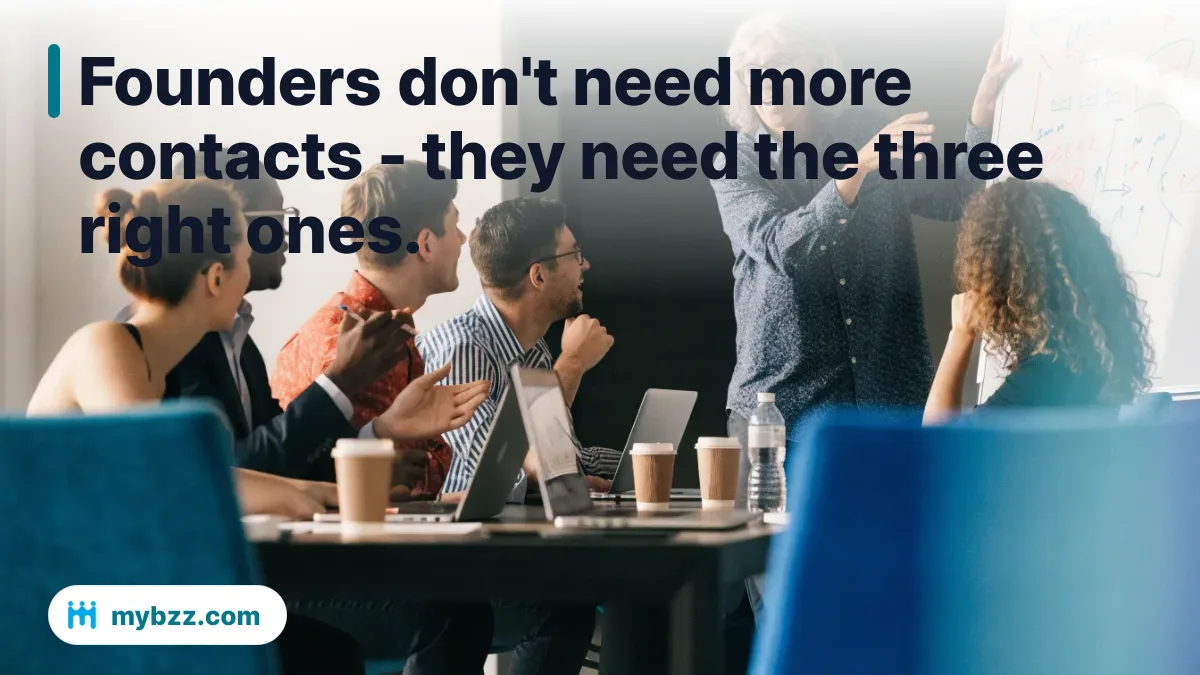
I read user reports myself as CEO – not because we lack support, but because every product decision for the next quarter is sitting in that inbox. The pattern I see constantly: founders don’t need more contacts, they need the three right ones. That’s what AI matching is for.
How incubators compare across regions and what it means for founders
Incubator networks aren’t equal, and geography shapes them. Student cells and young-India initiatives drive a surprising amount of grassroots connection-building.
The lesson for founders choosing a program: raw count of incubators says little about network quality. What matters is density and reach. A mid-sized program with ten mentors who actively make introductions beats a prestigious one where mentors show up for the brochure.
This is why AI matching platforms complement incubators rather than replace them. Your physical program gives you depth in one cohort; a tool extends you globally, surfacing opportunities across borders that no local demo day would. For founders raising money, pairing both works – our guide to Mybzz vs bumble bizz walks through how an entrepreneur-only tool stacks against swipe-based apps, and Mybzz vs xing covers reach versus focus. If you’re exploring a shapr alternative because swipe matching feels too shallow, the fix is matching built on business intent, not profile photos.
Common networking traps founders fall into
Even inside a strong incubator, founders waste the network. The most expensive mistakes are predictable:
- Chasing quantity over quality. Fifty contacts you’ll never message lose to five people who’ll vouch for you. Quality matters far more than volume.
- Taking without giving. Networking works when you create value first. Offer an introduction, a referral, a fix before you need anything.
- Skipping the follow-up. A warm conversation decays fast. Consistent follow-up turns a handshake into a relationship – and most founders never send the second message.
- Staying inside the cohort. Your peers are comfortable. The investors and operators two degrees out are where growth comes from.
Sounds obvious? It is – and founders still do all four. The fix is a system: a simple contact tracker, a weekly rhythm for reaching out, and a bias toward giving before asking.
FAQ
What makes incubator networking different from general business networking?
Incubator networking is concentrated and curated – you’re placed among vetted founders, mentors, and investors who share a program and a time window, creating high-trust connections fast. General networking is broader but shallower, requiring you to build credibility from scratch with each contact. The incubator’s weak ties and alumni network are its biggest edge.
Can AI matching replace an incubator’s network?
No – it extends it. An incubator gives you deep, in-person ties within one cohort; AI matching platforms like ours connect you globally to entrepreneurs and investors you’d never meet otherwise. The strongest approach pairs both: physical depth plus digital reach across more than 50 countries.
How do I measure if an incubator’s network is actually valuable?
Ask whether alumni still introduce current founders to investors, how many mentors make active introductions, and what percentage of recent cohorts raised follow-on funding through program contacts. A living network produces warm introductions; a decorative one just lists impressive names.
Is networking more important than funding for early startups?
Often, yes. Capital is increasingly available from many sources, but the right introduction to the right investor or customer is scarce and can’t be bought. A strong network raises your credibility, which makes funding easier to secure.
If you’re evaluating incubators right now, judge them by one thing: how actively their network moves founders forward. Then extend that network beyond your cohort instead of waiting for luck. Post a free business offer, let AI match you with entrepreneurs and investors who share your intent, and start the conversations your physical program can’t reach. The founders who grow fastest treat networking as infrastructure, not an afterthought – build the system now, before you urgently need it.
Rate this article
Ready to grow your business?
Download MYBZZ for free and join thousands of entrepreneurs.
Download the app for free

Related articles
Guide to Mentorship Networking for Startups
25.10.2026 · 9 min
Networking for Startup Funding Success: Steps to Secure Capital
24.10.2026 · 7 min
Uncovering networking advantages for tech startups
05.10.2026 · 7 min