Networking strategies for tech entrepreneurs seeking mentorship
 Katarzyna Górecka
•
•
8 min read
Find effective networking strategies for tech entrepreneurs seeking mentorship. Learn how to connect with the right mentors and grow your business.
Finding a mentor as a tech founder rarely comes down to luck. The most reliable networking strategies for tech entrepreneurs seeking mentorship combine three moves: targeted digital outreach on platforms built for founders, active involvement in your industry’s communities, and structured matching that connects you with people who share your goals. Do all three and you stop waiting for the right conversation – you create it.
Below are seven practical strategies, each with concrete tools and steps.
1. Start with an AI-matching platform built for entrepreneurs
The fastest way to reach a relevant mentor is a tool designed for founders, not a general job or social network. Our platform, Mybzz, connects entrepreneurs through AI-driven matching that reads your goals, industry, and business intent – then pairs you with people who fit. Instead of cold-messaging strangers, you start conversations from mutual interest.
The matching reduces noise. You are not sifting through recruiters or salespeople. As one founder on our side put it, we built a platform for founders talking to founders.
- AI analyzes your profile, industry, and objectives to surface relevant matches
- Supports connections across more than 50 countries
- Available on web and mobile (iOS and Android), with a business feed on web
- Free plan with no time limit; VIP Lifetime Access is a one-time payment on web
Who it’s for: founders who want quality over volume. See how we stack up in our comparison of Mybzz i bumble bizz.
2. Use structured mentorship programs and accelerators
A mentor relationship inside a program comes with built-in accountability. Accelerators, founder networks, and university entrepreneurship centers pair you with experienced operators and add a cohort of peers at the same stage.
You get regular check-ins, a defined scope, and someone whose job is partly to care whether you succeed. Y Combinator and Techstars built their reputation on this blend of mentor access and peer networking, where cohort alumni often become introductions and investors years later.
Where to look:
- Startup accelerators with a mentor-in-residence model in your sector
- Founder communities and member networks that run matching programs
- University innovation and entrepreneurship centers, often open to local founders
- Dedicated mentor marketplaces like MentorCruise, where you book operators directly
Who it’s for: founders who want depth and structure. The tradeoff is time – programs expect commitment, and some charge fees – but the ones with real mentor access are usually worth it.
3. Show up at focused industry events and conferences
Conferences deliver something an app can’t fully replace: a dense room of relevant people at a shared moment. The networking opportunities at one well-chosen conference – a hallway chat, a roundtable, a shared ride to the airport – can outweigh months of cold outreach. The key is picking events where your niche actually gathers, not generic mega-conferences.
Preparation separates founders who leave with a mentor from those who leave with a tote bag. Carry physical business cards – they still work when a QR code fails. Prepare more than one pitch: a ten-second version for an elevator, a two-minute version for a coffee line, and a longer story for a real sit-down.
A simple event plan:
- Research attendees and speakers beforehand; list five people you want to meet
- Prepare multiple versions of your pitch for different scenarios
- Follow up within 48 hours while the conversation is fresh
- Pair the event with a networking app so the connection survives
The follow-up is where most founders lose the thread. A face-to-face spark means little without a message the next day.
Meet entrepreneurs who think like you
MYBZZ — the networking app for business. Free on iOS & Android.
4. Build a credible digital profile before you reach out
No mentor commits time to someone they can’t read in thirty seconds. Entrepreneurial networking starts with how you present yourself online. Before you send a single message, your profile should make your goals obvious.
A strong founder profile does three things: it states what you’re building in plain language, shows traction even if that’s an early prototype or landing page, and makes clear what guidance you want.
On AI-matching tools this matters more. Our system uses your profile to find matches, so vague bios produce vague connections. A sharp one-line description of your industry and intent gives the algorithm something to work with – and a potential mentor a reason to reply.
5. Treat large professional networks as a verification layer
Big platforms have a role, just not the one most founders assume. LinkedIn and X (formerly Twitter) are excellent for building a wide global network and verifying someone is who they claim. Where they fall short is intent – most people there aren’t signaling they want to mentor, so cold outreach converts poorly.
After a match surfaces on a founder-focused tool, check their LinkedIn to confirm their background. Follow potential mentors, engage genuinely with their posts, and warm up the relationship before any ask. This two-step approach – meet on an intent-based app, verify on a alternatywy dla LinkedIn – saves you from awkward cold pitches.
If you’re weighing options, our breakdown of Mybzz vs entre and the wider look at a shapr alternative unpack where each platform fits in a founder’s workflow.
6. Avoid the common networking and mentorship pitfalls
Most founders fail at networking not from lack of access but from predictable mistakes. Knowing them upfront is half the fix.
| Pitfall | What it looks like | Better move |
|---|---|---|
| Transactional asks | "Can you be my mentor?" in a first message | Start with a specific, small question |
| No follow-up | Great chat, zero contact after | Message within 48 hours with a next step |
| Wrong audience | Pitching recruiters or salespeople | Use intent-based matching to filter |
| Vague profile | No clear goal or stage listed | State what you build and what help you want |
| One-way relationship | Only ever asking, never offering | Share useful things back, even small ones |
The biggest trap is treating mentors as free consulting. The founders who keep mentors around report back, act on advice, and occasionally offer value in return – an introduction, a useful article, a beta invite. Relationships that only flow one way quietly end.
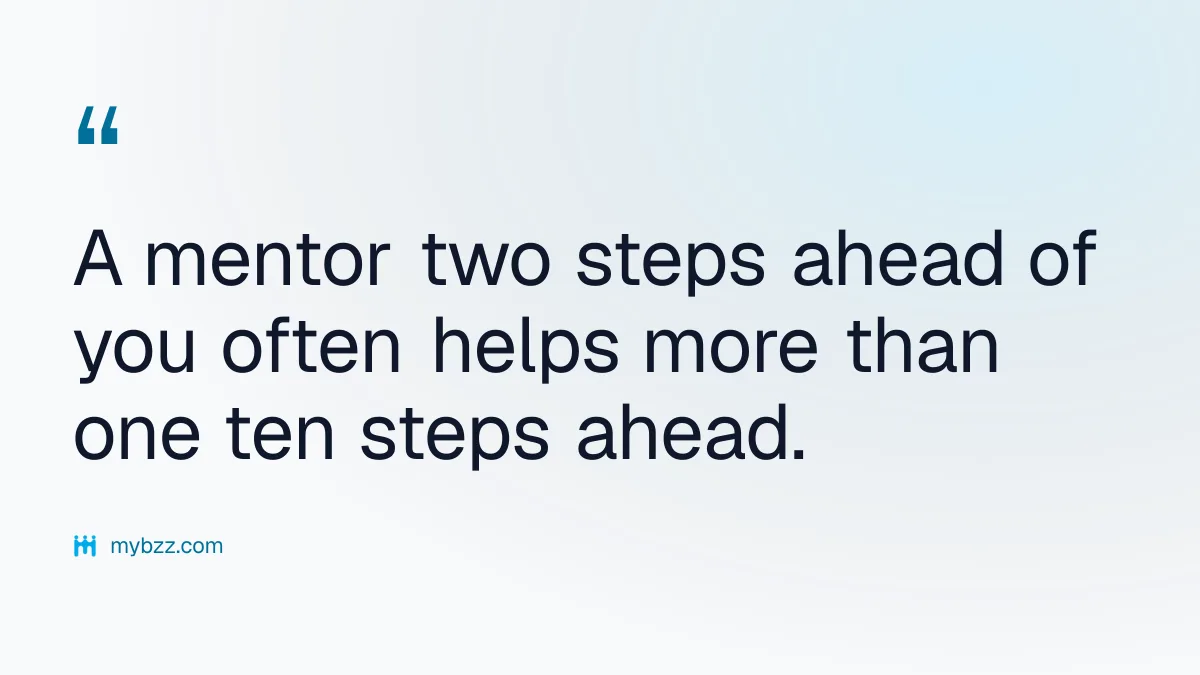
Another quiet killer: chasing the famous name instead of the right fit. A mentor two steps ahead of you often helps more than one ten steps ahead, because the lessons are still fresh and specific to your stage.
7. Combine the strategies into a repeatable system
No single channel is enough. Effective networking strategies for tech entrepreneurs seeking mentorship run as a loop: match on an intent-based platform, verify on a professional network, reinforce at events, and maintain the relationship over time.
A practical weekly rhythm:
- Send three to five targeted connection requests through AI matching
- Engage with two potential mentors’ content on a professional network
- Follow up with anyone you met in person within 48 hours
- Give something back to one existing contact – an intro, a resource, feedback
A founder who does this for three months builds more useful relationships than one who attends a single conference and burns out. For a deeper walkthrough, our Guide to Networking for Tech Entrepreneurs Seeking Co-Founders covers the co-founder angle, which overlaps heavily with finding mentors.
FAQ
How do tech entrepreneurs find a mentor from scratch?
Define what guidance you need, then use an AI-matching platform built for founders to find relevant people. Confirm their background on a professional network, warm up the relationship by engaging with their work, and open with a specific, small question rather than a broad "will you mentor me?" ask.
Is it better to pay for a mentor or find one for free?
Both work. Paid marketplaces like MentorCruise give you time and structure, which suits founders who want reliability. Free mentorship through accelerators, founder communities, and networking apps often builds into deeper long-term relationships, especially when you offer value back over time.
How many mentors should a startup founder have?
No fixed number, but two or three mentors covering different areas – product, fundraising, go-to-market – usually beats relying on one person. A mentor just a step or two ahead of your stage often gives more usable advice than a famous name far removed from your problems.
What should I say in a first message to a potential mentor?
Keep it short and specific. State who you are in one line, mention what you’re building, name why you’re reaching out to them specifically, and ask one concrete question they can answer quickly. A clear, low-effort first message gets far more replies than a vague request for ongoing help.
The best networking strategies for tech entrepreneurs seeking mentorship start with a single focused move – don’t try all seven at once. Set up a founder profile, send a handful of targeted matches, and follow up on every real conversation within two days. Mentorship compounds: the first relationship often introduces the second. Create a free account on Mybzz and run a few AI matches today.
Rate this article
Ready to grow your business?
Download MYBZZ for free and join thousands of entrepreneurs.
Download the app for free

Related articles
Local networking apps vs. in-person meetups: which is better?
13.11.2026 · 6 min
Guide to AI Event Matchmaking Platforms and Their Features
12.11.2026 · 7 min
How to Find Mentorship Opportunities Through Networking
10.11.2026 · 7 min